Aircraft Specifications
Performance| Endurance | 1 hour |
| Cruise Speed | 40 knots |
| Max Speed | 100 kts |
| Max Ceiling | 8,000 feet |
| Normal Cruise Altitude | 200 - 5,000 feet |
| Range | 35 nautical miles |
| Takeoff/Landing Speed | 23 knots (STOL-Capable) |
| Max Payload Capacity | 5 lbs total |
| Type | Single Engine, Tractor |
| Engine | .61ci Single 2-Stroke (electric available) |
| Construction | Wood Frame & Monokote |
| Landing Gear | Fixed |
| Wingspan | 5'11" |
| Length | 4'7" |
| Height | 11" |
| Weight | 7 lbs (dry/no payload) / 12.6 lbs (wet/max payload) |
- LED Navigation & Landing Lights (optional)
- Forward Look Camera (FLC)
- IR Night Landing System (IRNLS) (optional)
- GPS Tracker (optional)
- Centerline Fuselage Payload (5 lbs)
- Wing Payload Stations (2) (optional - 2.5 lbs each)
Operational Capabilities
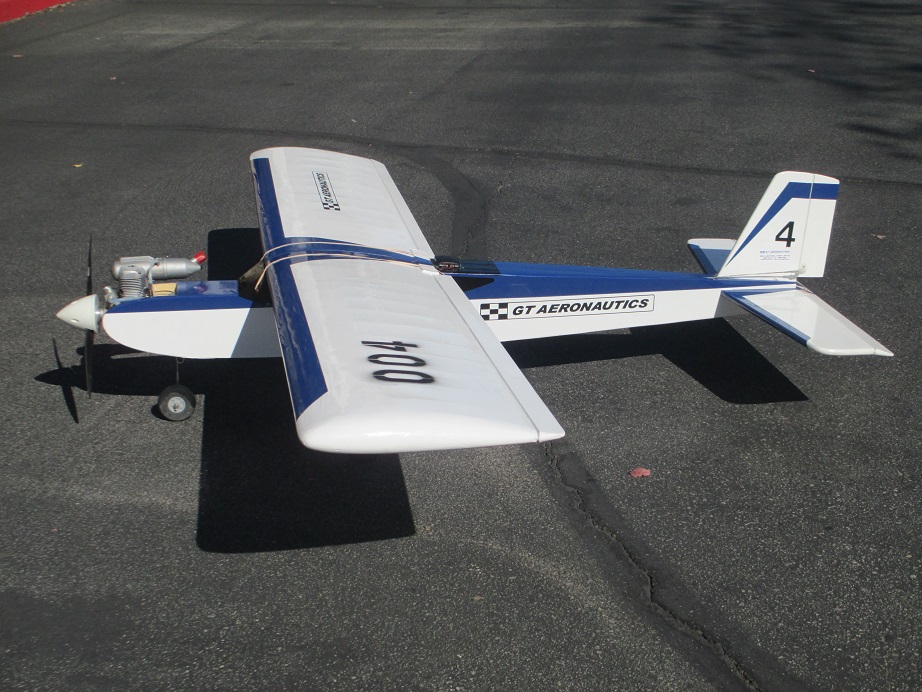
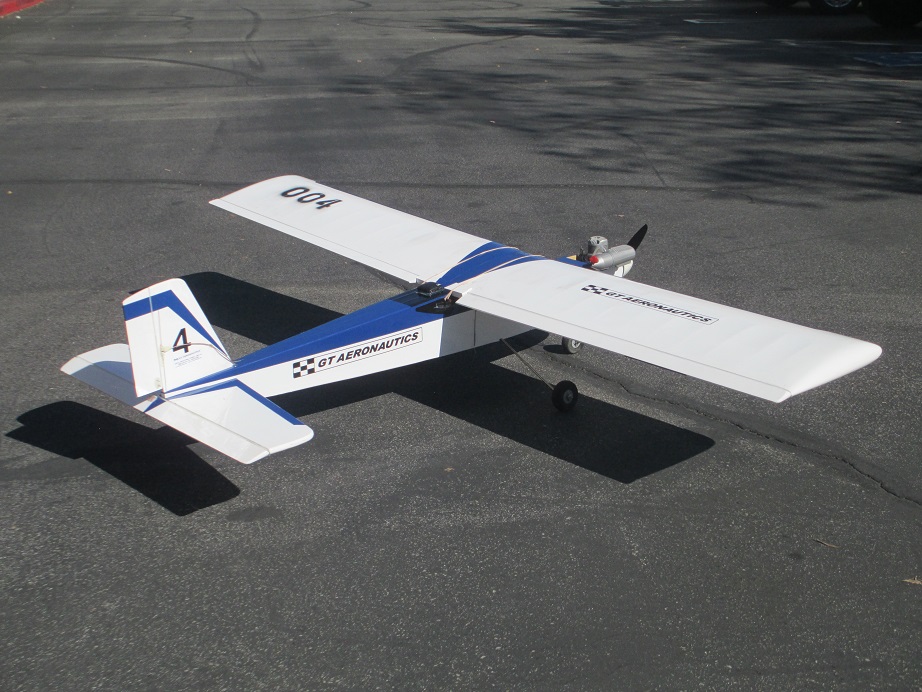
The GT50T RPAS utilizes a simple radio control trainer airframe modified to include a full autopilot system, Command and Control (C2) module, and GPS system to create an effective RPAS trainer as well as an RPAS that can simulate other aircraft or fulfill roles as a target aircraft.
The light wing loading combined with the power of a 2-stroke engine permit short field takeoff and landings from semi-improved surfaces. The aircraft incorporates a high-lift, slow-speed airfoil and cruises at approximately 40mph with an endurance of approximately 60 minutes. Flight operations may be conducted in both rural and urban areas.
The simple fixed tricycle landing gear is rugged and provides a robust capability for rough-field operations. The powerplant is an air-cooled, single cylinder 2-stroke engine. Optional powerplants are available, including electric. Onboard power is supplied exclusively by lithium polymer batteries. On-site assembly, launch, and operation are accomplished with only 2 personnel in less than 30 minutes.
NOTE: The performance specifications listed above are based on flight testing completed in 2015. The GT50T RPAS completed initial flight testing in June 2015 and became operational in August 2015.